Unleashing Playful Energy: The Power of the Dazzle Typeface
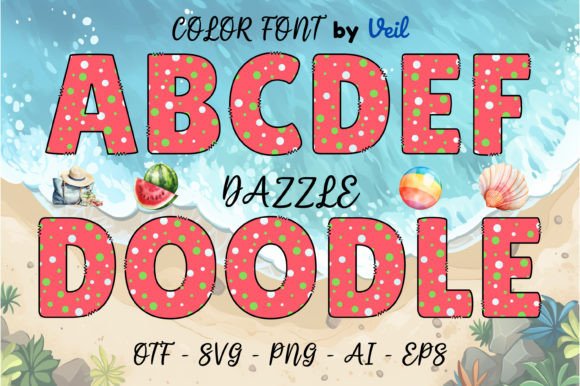
If you’ve ever stared at a blank canvas trying to summon the right vibe for a project, you know that typography isn't just about legibility—it’s about emotion. We often get so caught up in the "safe" choices like Helvetica or Montserrat that we forget the sheer joy a font can bring to a design. Enter the Dazzle typeface, a creative font that throws the rulebook out the window. It isn't just a collection of letters; it’s a vibrant splash of personality. Designed to capture a whimsical and artistic feel, this typeface is quickly becoming a favorite for anyone looking to inject a bit of fun into their visual communication.
Whether you are a designer working on a children's book, a small business owner wrapping artisanal goods, or a content creator trying to stop the scroll on social media, Dazzle offers a distinct visual language. It bridges the gap between professional design assets and playful expression, proving that you don't have to sacrifice quality to have a little fun with your layout.
Why "Fun" Typography Matters in Modern Branding
There is a psychological shift happening in design and marketing. For years, the trend was "clean," "minimal," and "corporate." While those styles have their place, modern audiences—especially Millennials and Gen Z—are gravitating toward brands that feel human, approachable, and authentic. This is where a premium font like Dazzle shines. Its whimsical vibe taps into nostalgia and creativity, instantly making a brand feel more relatable.
Think about the last time you bought a product based on its packaging alone. Often, it’s the quirky labels on a jam jar or the playful headers on a restaurant menu that catch your eye. Dazzle acts as a visual cue that says, "We don't take ourselves too seriously, but we do care about quality." It helps in breaking the ice with your audience before they even read a single word of your copy.
Practical Applications: From Screens to Stickers
The versatility of a display font like Dazzle is one of its strongest selling points. Because it carries such a strong inherent personality, it can elevate a wide variety of projects without needing much additional embellishment. Let’s look at where this typeface truly excels in the real world.
Packaging and Merchandise
For entrepreneurs selling physical products, packaging is prime real estate. Dazzle is perfect for packaging design where the goal is to stand out on a crowded shelf. Imagine this typeface on a line of organic fruit snacks, artisanal soaps, or quirky stationery. It works beautifully on stickers, hang tags, and tote bags. The playful letterforms create an immediate connection with the product's character, making the unboxing experience memorable.
Children’s Media and Editorial Design
The most obvious application, but one worth emphasizing, is in children's books and educational materials. However, don't limit Dazzle to just kids' stuff. In editorial design, a whimsical header font can break up the monotony of long-form text. Using Dazzle for pull quotes or chapter titles in a lifestyle magazine adds a layer of visual interest that keeps readers engaged. It transforms a standard layout into something that feels curated and designed with intention.
Digital Presence and Marketing Assets
In the realm of web design and social media, attention spans are short. You have milliseconds to make an impact. Dazzle is an excellent tool for creating high-impact marketing assets. Use it for Instagram graphics, sale banners, or email headers to draw the eye immediately. On a website, it works best for "hero" text—those big, bold statements at the top of a page. It gives your digital brand identity a spark of energy that standard sans-serif fonts often lack.
Mastering the Art of Font Pairing
While Dazzle is a showstopper, using a display font for body text is a rookie mistake that can kill readability. The real magic happens when you pair it correctly. Because Dazzle is expressive, it needs a grounding partner. A clean sans-serif font (like Roboto, Lato, or Open Sans) or a simple serif font (like Lora or Merriweather) works best.
The rule of thumb is contrast. If Dazzle is the "loud" friend at the party, your body text needs to be the "calm" one. Use Dazzle for your H1s, H2s, and call-to-action buttons. Let your body copy remain in a highly legible, neutral typeface. This hierarchy ensures that your design feels professional and easy to read, while still maintaining that whimsical flair you’re after.
Visual Consistency and Brand Recognition
One of the biggest challenges in branding is maintaining consistency across different platforms. A brand voice needs to sound the same on a billboard as it does on a Twitter ad. Typography is a massive part of this. By incorporating Dazzle into your brand identity system, you create a recognizable signature.
When a customer sees that specific playful letterform, they should immediately associate it with your brand. This is how you build equity in your visual assets. It’s not just about looking good; it’s about being remembered. Dazzle helps cement that memory because it is distinct. It’s not a font people see every day, which gives your brand a unique edge in a sea of sameness.
Navigating Technical and Licensing Considerations
Before you download and go wild, it is crucial to understand the practical side of using design assets. First, always review the included font styles. A robust typeface family often includes variations in weight (Bold, Light) or style (Italic). Knowing what tools you have in the toolbox allows you to create more nuanced designs.
Second, and most importantly, check your commercial licensing. This is a non-negotiable step for any professional project. If you are using Dazzle for a client's logo, a product you intend to sell, or a commercial website, you need the appropriate license. Many premium fonts offer different tiers for personal vs. commercial use. Respecting these boundaries protects you legally and supports the type designers who create these beautiful tools for us.
Tips for Testing and Implementation
Don't just drop the font into your final design and hope for the best. Treat typography as a variable that needs testing. Here are a few practical tips for implementing Dazzle effectively:
- Check the Context: Does the font look good at the size you intend to use it? Display fonts often lose their charm if shrunk down too small. Test it at various sizes to ensure the "whimsical" details don't turn into "muddy" pixels.
- Color Interaction: Playful fonts often interact differently with color than rigid block letters. Try Dazzle with bright, bold color palettes or pastel shades to see how the letterforms breathe with the background.
- Kerning Matters: Sometimes, playful fonts have loose kerning (spacing between letters). Check the spacing to ensure your words look cohesive, especially in logo design where precision is key.
- Audience Alignment: Finally, does it fit the target audience? If you are designing for a law firm, Dazzle might be a stretch. But for a daycare, a bakery, or a creative agency? It’s a perfect match.
In the end, design should be enjoyable. Choosing a font like Dazzle is a commitment to bringing joy into your work. It’s a tool that encourages you to think outside the box and communicate with a smile. By balancing its playful energy with smart design principles and strategic pairings, you can create visual content that not only looks fantastic but also resonates deeply with your audience. So go ahead, let your designs sparkle.