Skull: A Color Font for Bold, Eye-Catching Design
Imagine a typeface that doesn't just sit quietly on the page but actively participates in your design's story. Picture letters that come alive with depth, texture, and built-in visual effects, transforming ordinary text into a striking graphic element. This is the promise of modern color fonts, and a standout example is Skull. Unlike traditional fonts that are limited to a single flat color, Skull arrives ready to impress with gradients, shadows, and multi-tonal effects baked right into its character set. For designers, marketers, and creative entrepreneurs, this opens up a new dimension of expression, allowing typography to carry mood and style without extra post-processing.
Understanding the Visual Power of a Display Font
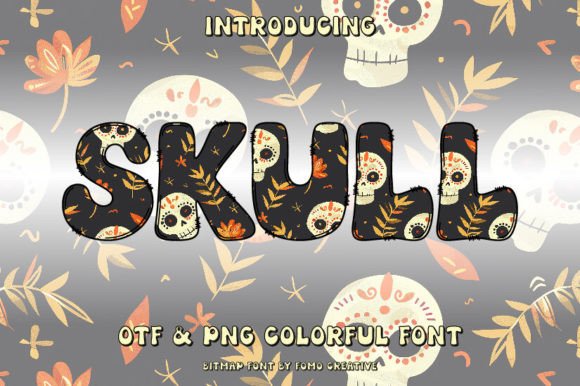
At its core, Skull is a display font, meaning its primary strength lies in headlines, logos, and short bursts of impactful text rather than lengthy body copy. Its visual appeal stems from its inherent complexity. Each glyph is crafted with care, featuring layers of color, subtle gradients, or textured finishes that give the letters a tangible, almost three-dimensional quality. This makes it a fantastic creative font for projects where you need immediate visual impact. Think of it as a design asset that does double duty: it communicates a word while simultaneously conveying a specific aesthetic—be it edgy, luxurious, playful, or mysterious.
The uniqueness of a typeface like Skull lies in its ability to bypass the need for additional graphic effects. A designer can simply type out a headline and already have a piece that features rich, diverse colors and visual depth. This can be a huge time-saver in fast-paced environments like creating social media graphics or designing marketing assets. It provides an immediate shortcut to achieving a polished, professional look that stands out in a crowded visual landscape.
Where a Font Like Skull Truly Shines: Practical Applications
The real value of any premium font is measured by its utility. Skull’s bold, decorative nature makes it particularly well-suited for projects that demand attention. Here’s how it can be applied across various creative and commercial domains:
- Branding and Logo Design: A logo design using Skull can instantly communicate a brand's personality. For a gaming company, a music label, or a streetwear brand, the font's built-in effects can suggest energy and modernity. It helps build a distinct brand identity that is memorable and visually cohesive from the start.
- Packaging and Merchandise: On product packaging, Skull can make a product leap off the shelf. It’s excellent for headers on boxes, labels, or tags. For merchandise like t-shirts, posters, or stickers, it provides that ready-to-print artwork feel, enhancing the perceived value of the product.
- Editorial and Print Materials: In editorial design, such as magazine covers or feature article headers, Skull can set the tone for a story. Similarly, for event invitations, posters, or festival flyers, it delivers the necessary visual punch to attract attendees.
- Digital Presence: For web design, it can be used strategically for hero section titles or call-to-action buttons where you want to guide the user's eye. In blog design, it can make post titles more engaging, improving click-through rates. As part of digital products like e-book covers or online course graphics, it adds a layer of professional polish.
Making It Work: Pairing, Readability, and Licensing
Introducing a powerful display font like Skull into your toolkit requires a thoughtful approach to ensure it enhances rather than overwhelms your design. The key is in the details of implementation.
The Art of the Font Pairing
A font with such strong character should rarely be used alone for all text. The most effective strategy is font pairing. Combine Skull with a clean, neutral companion. A simple sans serif font for body text or a quiet serif font for subheadings creates a beautiful contrast that maintains readability while letting Skull command attention as the headline star. For example, pairing it with a geometric sans serif like Montserrat or a classic serif like Lora can create a balanced and sophisticated hierarchy.
Testing for Your Specific Project
Always test the font in context. How does it look at the size you need? Does the color effect remain clear when scaled down for a mobile screen? Does it reproduce well in both digital and print formats? Viewing it on different screens and, if possible, printing a test page will prevent surprises. Check the font package for included font styles—does it come with a regular, bold, or italic variant? This can offer more flexibility in your layouts.
Understanding the Fine Print: Commercial Licensing
Before using any commercial font in a project, especially for client work or products for sale, it is non-negotiable to review the licensing agreement. Ensure the license covers your intended use, whether it's for a single logo, a full branding package, or unlimited merchandise. Respecting font licensing is a fundamental part of professional practice and protects both you and your clients.
Elevating Your Visual Communication
Ultimately, incorporating a typeface like Skull is about enhancing your visual storytelling. It’s a tool for achieving stronger visual consistency across a campaign, boosting brand recognition through unique typography, and driving audience engagement with captivating visuals. It moves beyond mere text to become a central part of the design's emotional appeal. By choosing the right context, pairing it wisely, and respecting its design, you can leverage this kind of modern typography to create work that is not only seen but felt, leaving a lasting impression on your audience.